Is your website a high-performance sales engine, or is it a silent leak in your revenue stream? Most Sydney business owners realise that a digital presence is vital, yet many still struggle with inconsistent branding and high bounce rates on mobile devices that now account for 64% of global traffic. Investing in professional responsive web design for business isn’t just about making things look pretty on a phone; it’s about engineering a seamless environment that captures attention and commands authority regardless of the screen size. Following Google’s May 2026 Core Update, the algorithm prioritises user experience and technical fluidity more than ever before.
You likely know that your customers are browsing on the go, yet seeing your premium brand look cluttered or broken on a smartphone is frustrating. You’ll discover how a sophisticated, responsive architecture closes the conversion gap between mobile and desktop traffic while securing your competitive edge in the search rankings. We will explore the shift toward WCAG 2.2 accessibility standards and the strategic layout changes required to turn mobile visitors into loyal clients. If you’re ready to elevate your digital infrastructure, contact our Sydney team at info@cws.marketing or call +61 0410 017 504 to discuss your next move.
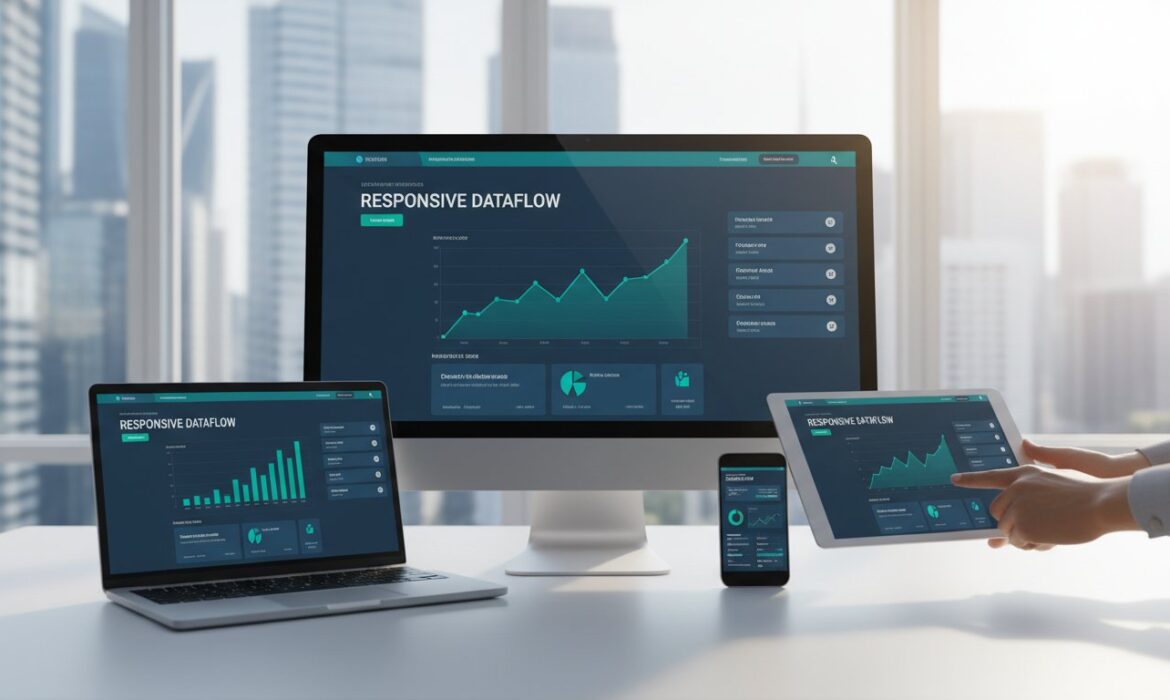
Is your website a rigid relic or a fluid asset? In 2026, the digital landscape is no longer a collection of static pages; it’s a living ecosystem that must adapt to every human interaction. For the modern CEO, responsive web design for business represents your 24/7 digital storefront, functioning across an infinite array of dimensions. While competitors struggle with fragmented experiences and broken layouts on newer devices, a unified architecture ensures your brand remains premium and accessible. To understand the technical foundation, one can look at What is Responsive Web Design as a concept that replaces fixed grids with a flexible, AI-aware environment. This transition resolves the chaos of device fragmentation, providing a single, authoritative version of your truth to every prospect in Sydney and beyond.
How does a website actually “breathe” across different screens? It relies on three fundamental engineering principles that move beyond the limitations of old-school web development:
Why choose responsive over adaptive design? Adaptive design creates several fixed snapshots for specific devices, which means your site might look perfect on an iPhone 15 but completely broken on a new foldable tablet or AR glasses. Responsive design is the superior choice for long-term scalability because it uses a single codebase that flows like water into any container. This approach drastically reduces technical debt and maintenance overhead. You won’t need to update three different versions of your site every time you launch a new service. It’s about efficiency and future-proofing your investment. If you’re ready to audit your current digital infrastructure, our Sydney-based experts can help. Reach out to us at info@cws.marketing to discuss how we can transform your site into a high-performance asset.
Why pay for traffic only to watch it evaporate on a broken mobile screen? As of early 2026, mobile devices account for approximately 64% of global web traffic, yet many Sydney businesses still treat mobile users as a secondary priority. Google’s May 2026 Core Update has solidified a harsh reality: if your site doesn’t provide a seamless, high-performance experience, it won’t just rank lower; it will effectively disappear from relevant search results. Implementing a sophisticated responsive web design for business is no longer a luxury for the few. It’s a foundational requirement for any brand that intends to remain visible and competitive in a mobile-first world.
When your professional authority is diluted by a fragmented mobile view, you aren’t just losing a click; you’re losing trust. Imagine a prospect finding your brand through a high-intent search, only to be met with overlapping text and unclickable buttons. This friction kills momentum and sends your bounce rate soaring. By prioritising a unified architecture, you ensure your brand’s sophistication remains intact across every screen size. This consistency has proven positive impacts on search engine rankings, as user engagement signals tell Google that your content is both relevant and accessible. For a broader perspective on how to achieve this technical excellence, visit Cornerstone Marketing Solutions.
Responsiveness is the engine behind your technical SEO performance. Google’s current benchmarks focus heavily on Largest Contentful Paint (LCP) and Cumulative Layout Shift (CLS). If your layout jumps around while loading on a smartphone, your rankings will suffer. Industry data shows that even a one-second delay in mobile load times can lead to a significant drop in conversion potential, costing businesses thousands in projected revenue. In the eyes of search engines, a non-responsive site is an invisible site.
The traffic-conversion gap is a silent killer for modern businesses. While mobile drives the majority of visits, conversion rates often linger between 1.8% and 2.5%, compared to desktop’s 4.0%. This discrepancy usually stems from poor mobile UX. By removing ‘pinch-and-zoom’ hurdles and ensuring buttons are ‘thumb-friendly’, you increase the velocity of your lead generation. A strategic approach to responsive web design for business turns your site into a high-conversion sales engine that captures transactional intent the moment it strikes.
If you’re unsure if your current platform meets these 2026 benchmarks, it’s time to request a performance audit with our Sydney team. We specialise in identifying the technical leaks that are currently costing you leads.
Is your website a recurring liability or a scalable growth asset? Sophisticated leaders recognise that a fragmented digital presence is a drain on resources. Managing separate mobile and desktop versions is a redundant practice that doubles your maintenance costs and dilutes your brand authority. By committing to responsive web design for business, you consolidate your technical overhead into a single, high-performance stream. This isn’t just about current devices. It’s about future-proofing your brand for foldables, wearable tech, and AR glasses that haven’t even hit the mainstream Sydney market yet. Your website becomes the central hub for all AI marketing and automation, ensuring every customer touchpoint is captured and utilised effectively.
Data integrity is the silent driver of modern ROI. When you manage multiple versions of a site, your analytics become fragmented, leading to skewed insights and missed opportunities. A unified responsive architecture provides a clean, singular data stream that is essential for accurate AI-powered forecasting. This clarity allows you to see exactly where your leads are coming from and how they move through your funnel. It transforms your website from a simple digital brochure into a sophisticated intelligence tool that informs every strategic decision you make.
Efficiency is the hallmark of a visionary strategist. Managing one URL simplifies your global SEO agency efforts, ensuring that every backlink and content update builds equity in a single domain. This consolidation directly lowers your Customer Acquisition Cost (CAC) by improving organic visibility and reducing the need for device-specific ad campaigns. A unified digital asset is far more valuable than a disjointed collection of apps and web pages. It provides a consistent journey that builds the trust necessary for high-value conversions, ensuring your marketing dollars work harder for you.
How will AI-driven search engines interpret your content? Search Generative Experience (SGE) and modern LLM crawlers require clean, structured data to understand your business’s value proposition. Responsive design acts as the “grammar” of the modern web, providing a logical hierarchy that AI can easily parse. When your data is consolidated through a responsive framework, it becomes ready for deeper AI integration and automation. This structure ensures your brand is not just seen by humans, but correctly categorised by the algorithms that now gatekeep your market share. If you’re ready to audit your site’s readiness for this shift, reach out to our Sydney team at info@cws.marketing or call +61 0410 017 504.

Is your digital presence truly accessible, or are you unintentionally barring a significant portion of your potential audience? In 2026, compliance with WCAG 2.2 is the non-negotiable benchmark for every professional platform. Accessibility is no longer a secondary consideration; it is a legal and ethical requirement that ensures your brand remains inclusive to all users. Beyond ethics, implementing high-level responsive web design for business signals a secure and professional environment to both humans and search algorithms. When a site scales perfectly and functions flawlessly, it builds the trust necessary to move a prospect from curiosity to commitment.
Speed remains the ultimate currency of the modern web. Utilising modern asset formats like WebP and AVIF isn’t just a technical preference. It is a direct revenue strategy. High-performance sites in Sydney must load almost instantaneously to capture the 64% of global traffic now originating from mobile devices. If your site lags, your revenue leaks. Many owners ask why they shouldn’t just build a mobile app instead. While apps have their place, a responsive website offers broader reach and lower friction, serving as the essential foundation of your digital ecosystem before you ever consider the complexities of a standalone application. To go deeper on engineering your site specifically for revenue outcomes, our custom website design for conversion guide outlines the precision strategies that can boost your conversion rates by up to 400%.
How do you manage complex information on a small screen? The debate over the ‘burger menu’ continues, yet the resolution lies in strategic prioritisation. You must ensure your primary CTA is always within easy thumb-reach to reduce user frustration. Hierarchical design allows you to present the most critical information first while tucking secondary options away. Responsive design is the art of knowing what to show and what to hide. It requires a disciplined approach to layout that rewards the user with clarity rather than clutter.
Choosing between a website and mobile app development services doesn’t have to be a binary decision. For many sophisticated Sydney enterprises, the two should share a unified design language to ensure brand cohesion. You can leverage Progressive Web App (PWA) features to bridge the gap, offering app-like functionality such as offline access and push notifications directly through the browser. This hybrid approach allows you to scale your presence without duplicating your development efforts. If you are ready to elevate your technical benchmarks, you should optimise your digital standards with our strategic team today.
Are you prepared to settle for a digital presence that merely keeps pace, or do you demand a platform that commands your market? At CWS, we believe that every pixel must serve a specific commercial purpose. Our philosophy of “Client Winning Strategies” moves beyond simple coding to ensure that responsive web design for business functions as a high-velocity sales engine. We don’t just build websites; we engineer sophisticated digital assets that align with your overarching business objectives. By conducting a comprehensive CWS Audit, we pinpoint the exact performance leaks, such as sluggish load times or fragmented mobile UX, that are currently diverting your potential revenue to more agile competitors.
Integration is the bridge between a beautiful design and a functional business tool. Your website shouldn’t exist in a vacuum. It must play nice with your CRM, support your Google SEO efforts, and serve as the foundation for your marketing automation. Our approach ensures that your technical infrastructure is robust enough to handle the demands of modern search algorithms while remaining flexible enough to adapt to your growing team’s needs. We focus on creating a unified environment where data flows freely, providing you with the insights necessary to make informed, strategic decisions.
Transitioning from a static web presence to a dynamic growth engine requires more than just a surface-level redesign. It demands a data-driven approach where continuous performance optimisation is the standard. Our methodology ensures your platform is fully prepared for AI integration and automation, allowing your site to communicate seamlessly with your internal systems. This level of technical cohesion ensures that every lead is captured and tracked with precision. We build for the future, ensuring your site remains a robust hub for your reputation marketing and social media efforts.
Stagnation is the inevitable result of settling for “good enough” design. In a market where Google’s May 2026 Core Update has raised the stakes for user experience, a mediocre site is a liability you cannot afford. The transition from a problematic, fragmented current state to a high-performance future begins with a single strategic decision. You have the opportunity to transform your digital presence into a secure, professional environment that attracts and converts high-value clients. Settling for less is simply leaving money on the table for your competitors to collect.
This is your invitation to move beyond the status quo. If you’re ready to outperform your competition and secure your digital legacy in Sydney, contact our strategic advisors today. Reach out to us at info@cws.marketing or call our Sydney office directly at +61 0410 017 504 to schedule your consultation. Let’s turn your digital vision into a measurable competitive advantage.
Are you ready to lead your industry, or will you remain invisible to the 64% of users browsing on mobile devices? The digital landscape has fundamentally shifted toward fluidity and technical excellence. We’ve explored how a unified architecture satisfies the latest search algorithms and streamlines your ROI through continuous performance optimisation. Investing in responsive web design for business ensures your brand’s sophistication remains consistent across every touchpoint, from Sydney to the global stage. Settling for a static presence in a dynamic market isn’t a viable option for growth-minded leaders.
CWS is founded on a philosophy of ‘Client Winning Strategies’ and brings deep expertise in AI-powered marketing automation to every project. We operate from a Sydney-based strategic core with a global reach, providing the technical authority your business needs to outperform. Scale your business with a high-performance responsive asset from CWS Marketing and watch your digital presence transform into a precision sales engine. Your path to dominance starts with a single strategic upgrade. We’re excited to help you realise your brand’s full potential.
Responsive design is a fluid architecture that changes the layout based on the device, whereas mobile-friendly design often just shrinks a desktop site to fit a smaller screen. A responsive approach ensures that every element, from images to navigation, is optimised for the specific viewport. It provides a superior user experience by maintaining high-level brand consistency across all dimensions, ensuring your professional authority isn’t diluted on smartphones.
Investment levels for professional web development in 2026 typically range between $3,000 and $15,000 for small business sites based on current industry averages. The final cost depends on the complexity of your AI integrations and the number of custom-designed pages required. You should view this as a capital investment into a high-performance sales engine rather than a simple overhead expense. Contact our Sydney team at info@cws.marketing for a strategic consultation.
Absolutely. Google’s May 2026 Core Update prioritises sites that offer seamless navigation and fast load speeds on mobile devices. Because Google uses mobile-first indexing, a site lacking responsive web design for business will likely see its visibility diminish in search results. High-performance design directly influences Core Web Vitals, which are critical ranking factors that search engines use to determine your authority and relevance.
Not every organisation requires a standalone app to dominate their market. While mobile apps can convert at a higher rate for repeat users, a responsive website is your primary tool for discovery and broad market reach. You might consider a Progressive Web App (PWA) to bridge the gap, offering app-like functionality without the friction of a separate download. This strategy ensures you capture the 64% of global traffic originating from mobile browsers. To understand the full spectrum of your options, explore our guide on native vs hybrid mobile app development services and how each framework aligns with your business goals.
Timelines for a strategic redesign usually span eight to twelve weeks depending on the project scope. This period allows for a deep CWS Audit, wireframing, and the rigorous testing required to ensure your site performs across every possible device. Rushing the process often leads to performance leaks that cost more to fix in the long run. If you’re ready to start, call us on +61 0410 017 504 to discuss your timeline.
Retrofitting an old site is rarely the most efficient path for a growing brand. While you can technically add media queries to existing code, you risk creating significant technical debt and a clunky user experience. A clean, modern codebase ensures your site is ready for the latest AI marketing and automation tools. Starting fresh allows you to build a unified digital asset that functions as a high-performance sales engine from day one.
Navigation must be intuitive and thumb-friendly to reduce user friction. Prioritise your primary call-to-action so it remains accessible at all times, often using a sticky header or a well-placed hierarchical menu. Avoid cluttered lists that frustrate mobile users and instead focus on a clean structure that guides prospects through your sales funnel. Responsive design is the art of knowing what to show and what to hide to maintain clarity.
Testing should go beyond simply resizing your browser window on a desktop. Utilise professional tools like Google Search Console’s mobile usability reports and test on actual physical devices to check for interaction speed. You should specifically look for elements that overlap or buttons that are too close together for easy clicking. If you’re unsure of your site’s performance, our Sydney team can conduct a comprehensive audit to identify and resolve critical gaps.

Sydney, Australia